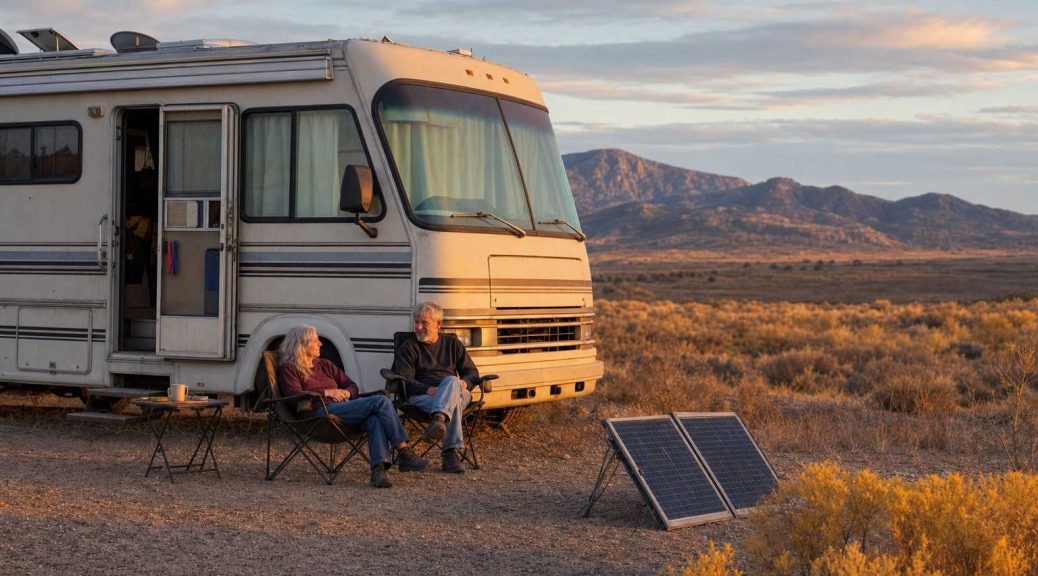
Boondocking for Beginners: How We Learned to Camp Off the Grid
Well, it has been a good long while since we put anything new up here, so first things first. We are back.
Truth be told, Debbie and I are a little old-fashioned about this. Everybody and their brother seems to do all their talking on social media now, a quick photo and a line or two and on with the day. That was never quite us. We would sooner sit down every so often and write the whole thing out, the way folks used to.
So we are dusting off the old blog, and we are picking back up with something we have grown a lot more comfortable with since those early days. Camping off the grid.
The first time Debbie and I parked the Winnebago somewhere with no power pole, no water spigot, and no friendly office to call when something went sideways, I will be honest, I did not sleep much. We had spent our first months as campground people. This was a different animal.
That night out in the open is what folks call boondocking, and once we got the hang of it, it changed the way we travel.
Boondocking is just camping without hookups. The freedom is wonderful. The trick is carrying your own power, your own water, and a little common sense.
If you have been wondering whether you can do this in your own rig, here is what we picked up, the mistakes included.
What boondocking actually is
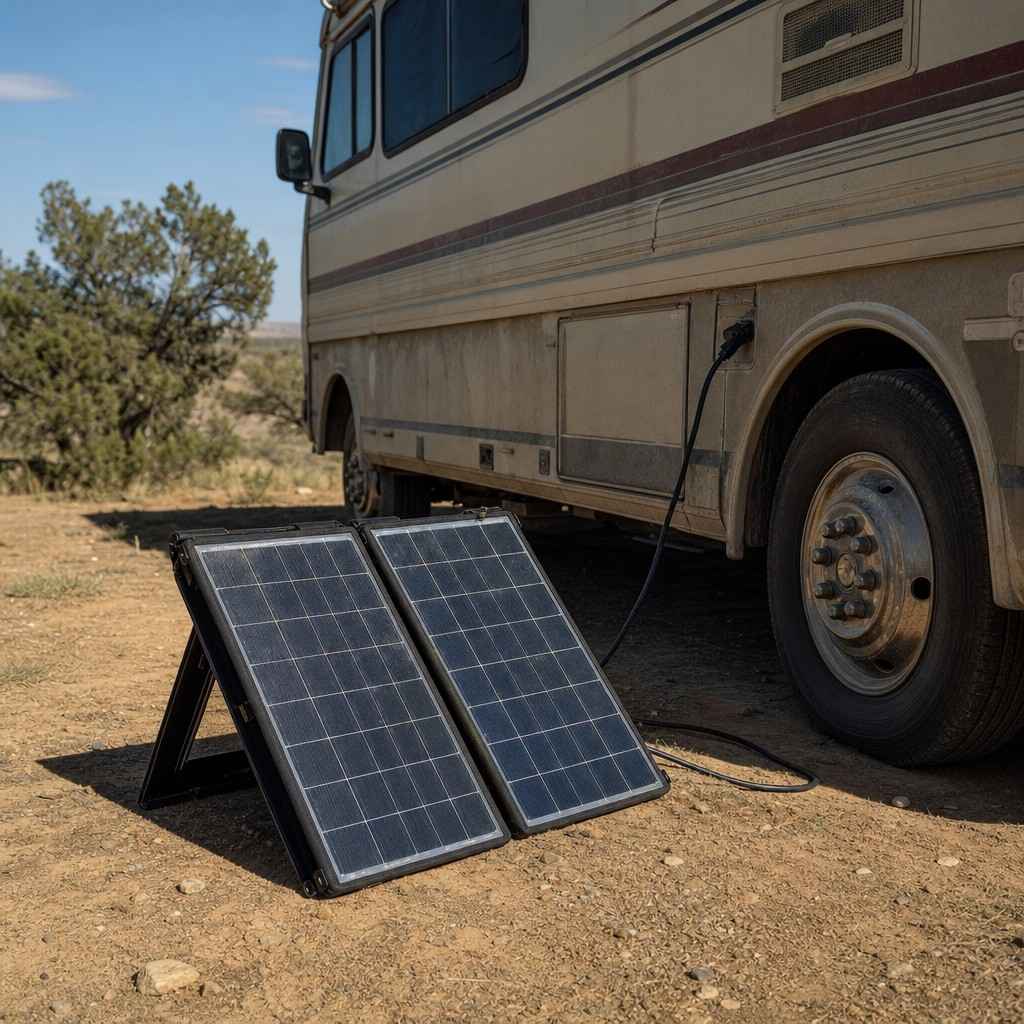
Boondocking, dry camping, dispersed camping. People use all three words, and they all land in the same place. You park the RV somewhere with no electric, water, or sewer hookups, and you live off what you brought with you.
That can mean a quiet patch of public land out West, a gravel lot, or in a pinch a rest area for a few hours of shut-eye. It is the opposite of pulling into a full-service park where everything is handed to you.
The appeal for us was simple. It is cheap, often free, and the spots are usually a lot prettier than a paved row of rigs packed in like sardines. For a couple watching the budget, that matters. We talk more about the money side in our notes on the real cost of full-time RV living.
Where you are actually allowed to do it
This is the part that worried me most at the start, and it turned out to be simpler than I feared.
A lot of boondocking happens on public land out West. The Bureau of Land Management generally lets you camp on dispersed sites for up to 14 days in one spot before you have to move along, though it varies by area, so always read the signs and check the local rules before you settle in.
There are other options too:
- National forest land, much of which allows dispersed camping.
- Some casino and big-box parking lots, where overnight parking is tolerated. Always ask the manager first. We have never once been told no when we asked politely.
- Rest areas, for a short stop rather than a real stay.
A word of caution from experience. “No hookups” does not mean “no rules.” We have learned to roll in during daylight, keep a low profile, and leave the spot cleaner than we found it. That last bit is not just manners. It is the reason these places stay open to RVers at all. There is more on choosing a spot in our piece on where you can park that camper.
Power is the first thing you will worry about
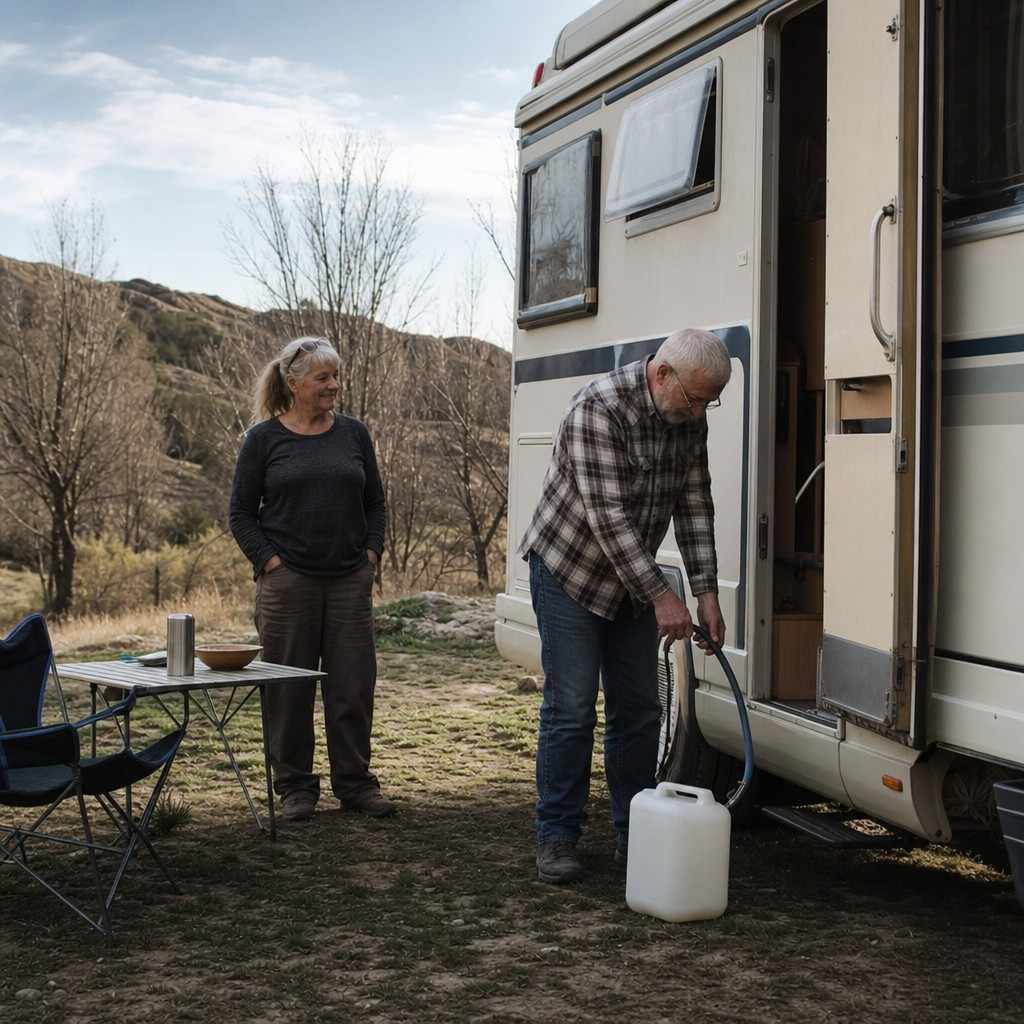
When you unplug from the post, your RV runs on its house batteries, and those do not last forever. The day we watched our lights go dim at nine in the evening taught me more than any manual.
Here is the order we figured things out, and I wish we had known it sooner.
Start by knowing what you have. Most rigs come with one or two house batteries. They will run your lights, your water pump, and the fans for a night or two if you are careful, and not much more.
Add battery if you can. We eventually put in a second deep-cycle battery, and it roughly doubled the time we could go between charges. If you are shopping, you can compare deep-cycle RV batteries on Amazon to get a feel for the sizes and prices.
Think about solar. A panel on the roof, or even a portable one you set in the sun, tops the batteries back up during the day for free. Ours is nothing fancy, but on a sunny afternoon it does the quiet work of keeping us going. Folks just getting started often look at a portable RV solar panel before committing to a full roof setup.
Keep the generator for backup. We run ours sparingly. It is loud, it burns fuel, and your neighbors out in the quiet will not thank you for firing it up at dawn.
Water in, water out
Power gets all the attention, but water is what actually decides how long we can stay parked.
Our fresh tank is the limit going in, and the gray and black tanks are the limit coming out. Whichever fills or empties first is when we have to move, and for us it is almost always the fresh water running low.
A few habits stretch it a long way:
- Navy showers. Wet down, shut the water off, soap up, rinse. You would be surprised how little you really need.
- Catch and reuse. We keep a dishpan in the sink and that rinse water finds a second job.
- Carry spare jugs. A couple of portable water containers in the truck have saved us a tank-fill trip more than once.
Debbie keeps us honest on the water, and I will admit she is better at it than I am.
Comfort and safety out where it is quiet
The thing nobody tells you about boondocking is how dark and how quiet it gets. That is most of the charm. It is also why we carry a little more gear for peace of mind.
Good lighting tops the list. We keep several bright flashlights and a couple of lanterns within reach, because when you need light out there, you really need it. We go through the rest of our must-have kit in the write-up on the equipment that makes RVing easier, and a fair bit of our safety setup earns its keep most when you are far from help.
We also tell someone roughly where we are headed, keep the truck fueled, and never let ourselves get backed into a spot we cannot easily pull out of in the morning. None of that is dramatic. It is just the boring stuff that lets two retired folks sleep soundly under a sky full of stars.
Start small, the way we should have
If I could do our first year over, I would not jump straight into a week off the grid in the middle of nowhere. I would spend a free night in a lot close to town, see what runs down, and learn the rig’s limits where a mistake is cheap.
Boondocking gave us the best nights we have had on the road. It also humbled us a few times. Both of those turned out to be worth it.
We sometimes include links to gear we use or would buy ourselves. If you purchase through one, we may earn a small commission at no extra cost to you. See our affiliate disclosure for the details.
Source: U.S. Bureau of Land Management, Recreation and Camping. Last checked June 2026.